
開催日時
2026年11月11日(水)午後4:00 〜 午後5:00
講師
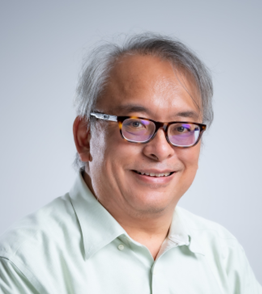
有賀 克彦 教授
(東京大学大学院新領域創成科学研究科、物質・材料研究機構ナノアーキテクトニクス材料研究センター)
演題
“At Interfaces, Delicate Energy and Environment Determine Fates of Molecules and Life”
Abstract
Molecules and biological entities are influenced by the delicate environment and energy at interfaces, particularly liquid interfaces, which determines their fate. For example, biomolecular recognition at the air-water interface can be up to one million times stronger than in bulk water. This is a manifestation of how the delicate environment at liquid interfaces drastically changes intermolecular interactions. Thus, interfaces serve as an excellent medium for the implementation of science and technology based on subtle energies. This concept can be realized in the dynamic two-dimensional media of thin films such as the air-water interface—specifically, Langmuir monolayers—because this medium possesses characteristics of both bulk (large-scale) and molecular dimensions. For instance, we have manipulated molecular machines (on the nanometer scale) at the air-water interface, and by controlling the bulk movement (in the size range of 10–100 cm) of the monolayer, we have achieved the “capture and release” of water-soluble guest molecules using embedded molecular machines at the air-water interface by delicate energies. By mechanically tuning molecular receptors, we have also succeeded in mechanical control of chiral recognition of amino acids and discrimination of nucleosides in supramolecular monolayers. This process can be regarded as delicate “molecular tuning.” Moreover, utilizing a two-dimensional medium at the liquid-liquid interface, we developed a cell culture technique and demonstrated the differentiation of human mesenchymal stem cells into neurons within the delicate interfacial environment, without the use of expensive reagents, thus determining detailed fate at the interface. Recently, by combining proton-coupled electron transfer at liquid interfaces, we have also developed precise doping techniques for organic semiconductor films. In this way, delicate processes at interfaces can control the fate and functions of molecules, materials, and cells.
座長
尹 基石 准教授
(物質変換科学ユニット)
言語
英語