I²CNER Research Seeds

  • Material Conversion
  • Materials / Transport / Heat
  • Hydrogen Energy
  • Hydrogen Compounds

Materials Informatics, Generative Models

Fajar, Adroit T.N.

Assistant Professor

Research Outline

Generative Models for Organic Molecules


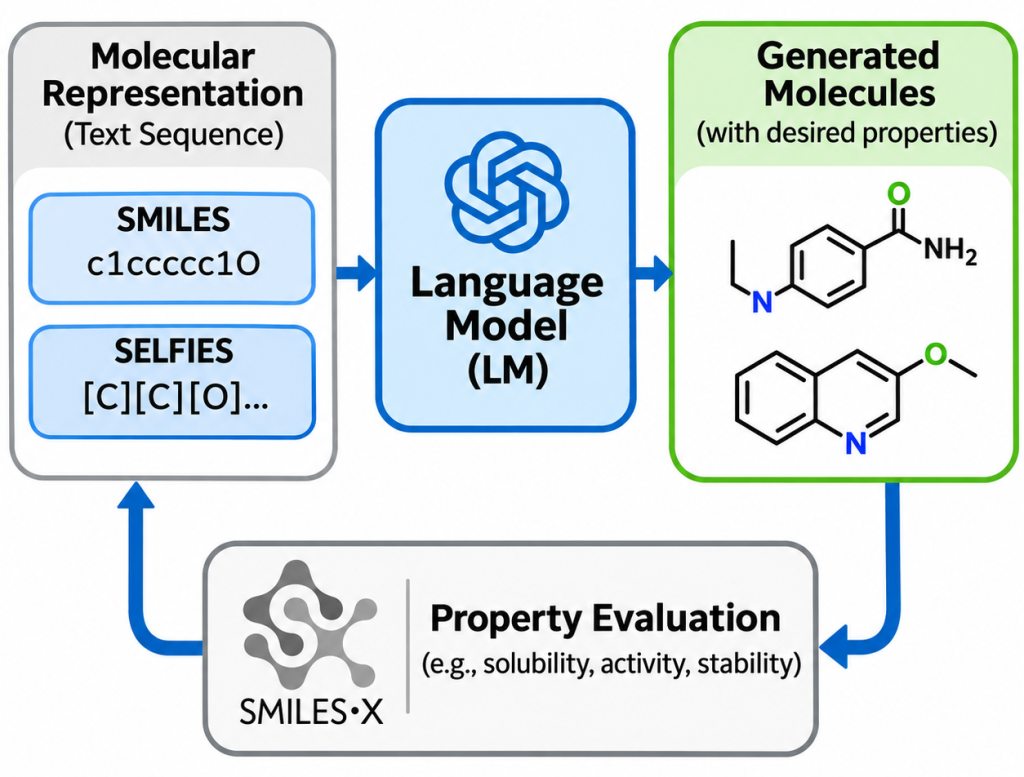
Organic molecules can be represented as text sequences (e.g., SMILES or SELFIES), allowing them to be processed using language models (LMs).

Our group develops LM-based approaches to generate novel organic molecules with desired properties and accelerate materials discovery.

Generative Models for Inorganic Crystals


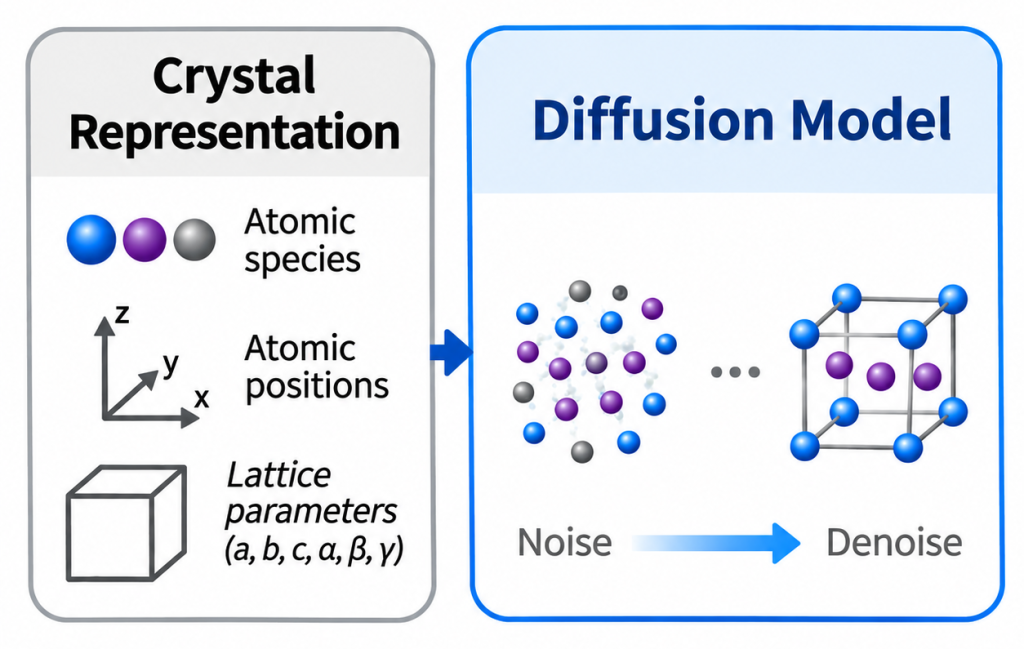
Inorganic crystals can be represented by their atomic species, positions, and lattice parameters. Diffusion models can learn to generate crystal structures by progressively introducing and removing noise from these structural representations.

Our group develops and adapts diffusion-based generative models to generate novel inorganic crystals with desired properties and accelerate materials discovery.

Research Methods and Facilities

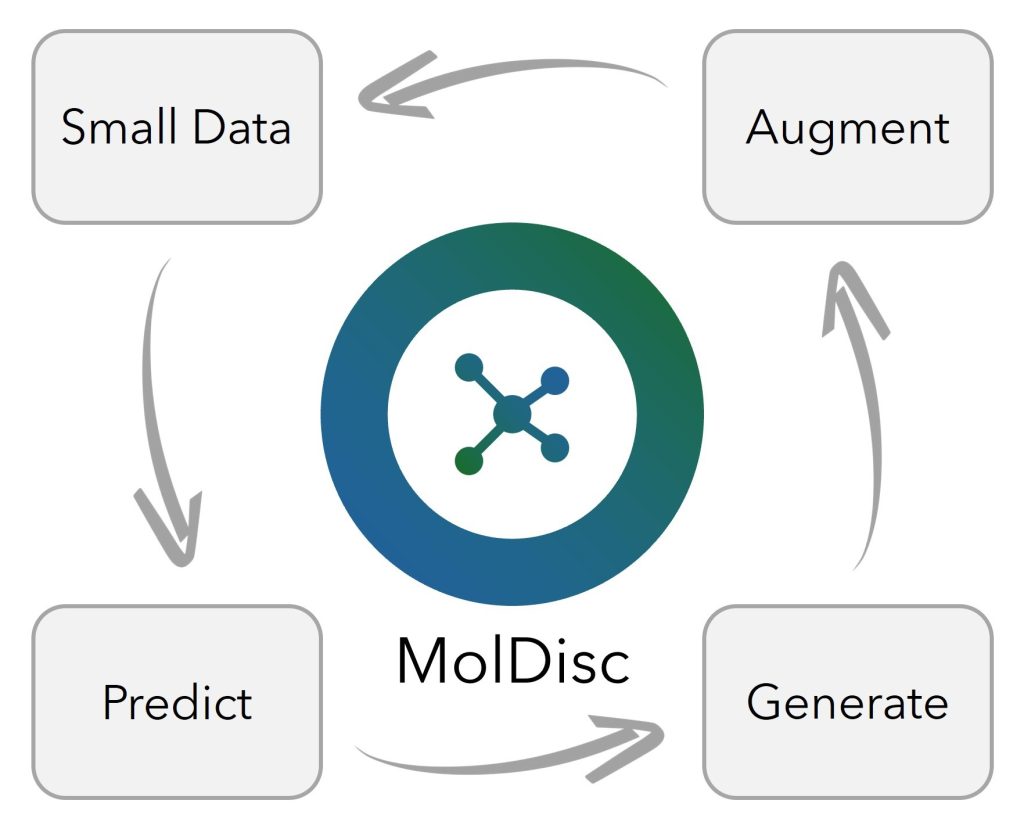
MolDisc: AI Toolkit for Molecular Discovery in Small-Data Regimes


MolDisc is an AI toolkit developed by our group that combines GPT-2 for molecular generation with SMILES-X for property prediction. It enables iterative generation and screening of novel organic molecules with desired properties, even when labeled training data are limited, as is often the case in chemistry research.

Explore MolDisc at
https://github.com/adroitfajar/moldisc

MatterGen Fine-Tuned with Experimental Data


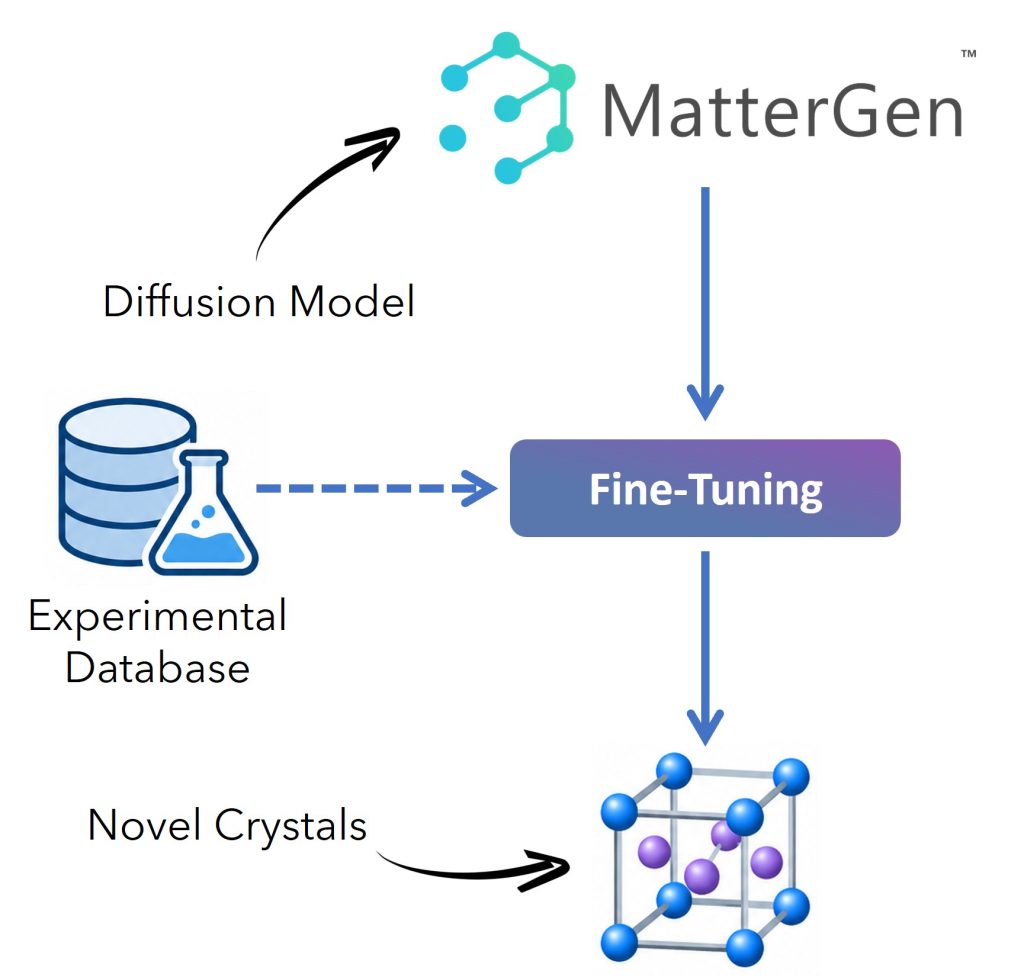
MatterGen is a diffusion-based generative model developed by Microsoft for inorganic materials discovery. It can generate novel inorganic crystal structures with desired properties.

Our group further fine-tunes MatterGen using experimental materials databases to guide the generation of crystal structures toward experimentally relevant materials, with the aim of improving their suitability for laboratory investigation.