I²CNER Research Seeds

  • Materials / Transport / Heat

Structural materials, Steel, Metal, Microstructure control,
Hydrogen embrittlement

Tsuchiyama, Toshihiro (PI)

Professor & Principal Investigator

Research Outline

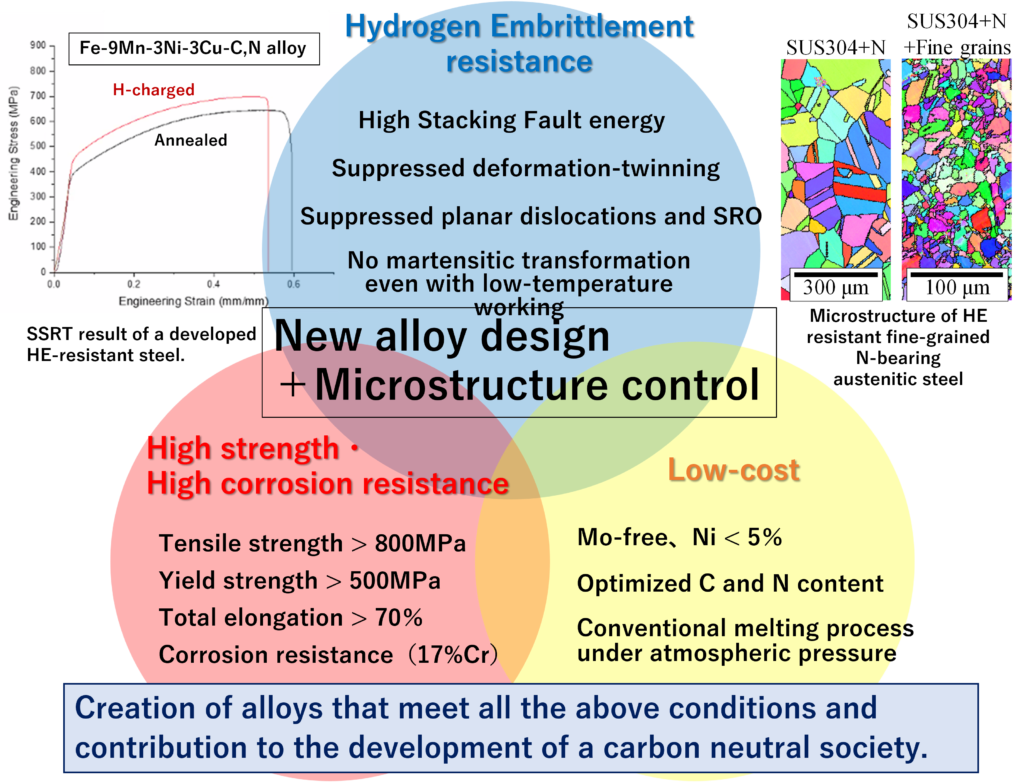
Production of FCC alloys with hydrogen embrittlement resistance

Increasing the strength of austenitic stainless steels, high-Mn steels, and high-entropy alloys with hydrogen embrittlement resistance through N addition and grain refinement

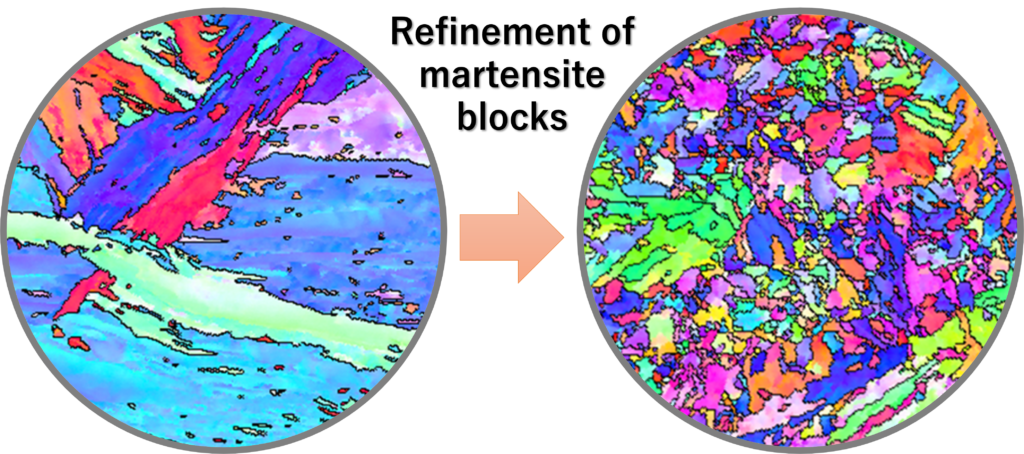
Microstructure control of martensitic steels (SCM, SNCM, SUJ2, martensitic SS, etc.)

Elucidation of the mechanism of hydrogen embrittlement of high strength steels with martensitic structure by some metallographic approaches. Microstructure control aimed at improving hydrogen embrittlement resistance properties based on the above knowledges.

Research Methods and Facilities

Alloy manufacturing and microstructure control

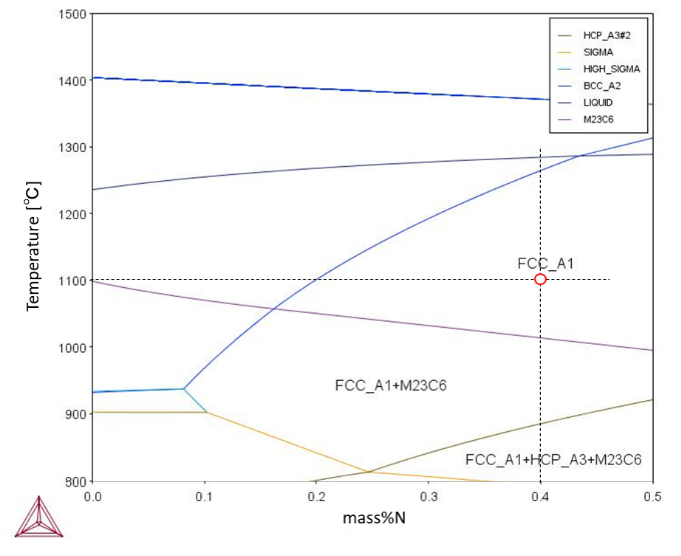
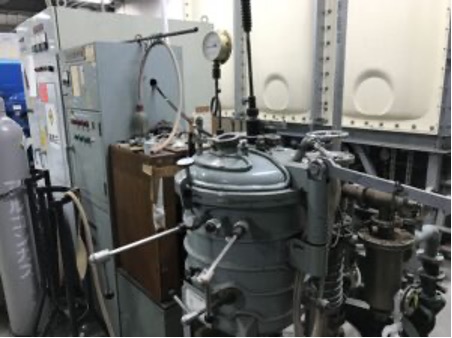
New alloy design is performed by Thermo-Calc. and the alloys are manufactured by vacuum melting furnaces and various heat treatment furnaces. We can also increase the strength of conventional materials.

Phase diagram of alloys
Vacuum melting furnace
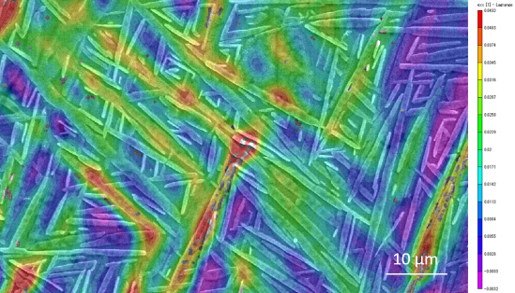
Strain distribution analysis by EBSD and DIC

EBSD and digital image correlation (DIC) methods are applied to materials subjected to in-situ tensile testing in the SEM to visualize non-uniform plastic deformation behavior and stress concentration at the microstructural level.

Visualized strain distribution by DIC
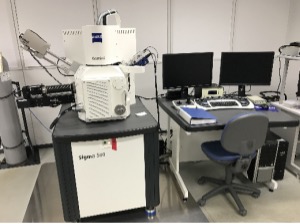
FE-SEM (with EBSD, EDS)
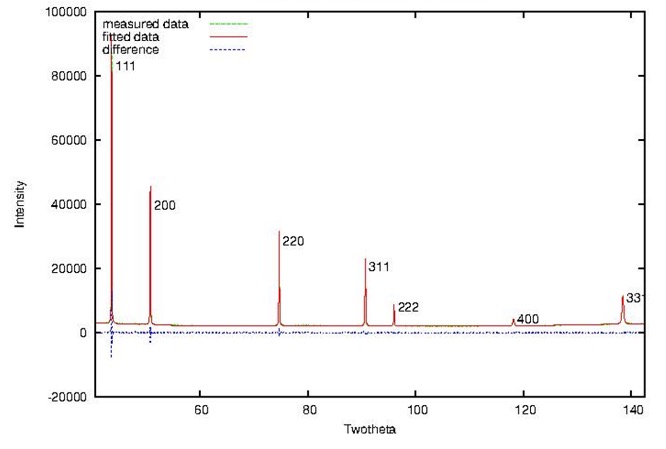
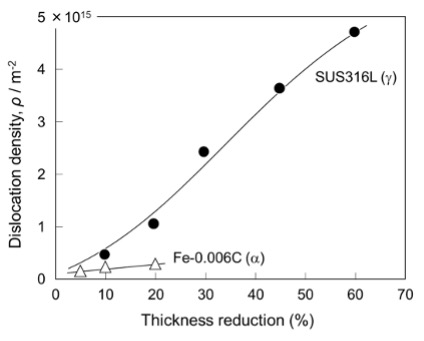
Dislocation density and distribution analysis by X-ray diffraction

Dislocation density and dislocation distribution parameters (M-values) are measured by X-ray line profile analysis of plate specimens, and their changes during mechanical testing.

X-ray line profile of crystals
Dislocation densities of deformed materials