I²CNER Research Seeds

  • Photo conversion
  • CO₂ Separation
  • Light Energy
  • Hydrogen Energy
  • Chemicals
  • Carbon Dioxide (CO₂)

Organic semiconductor, Photocatalyst, Hydrogen production

Watanabe, Motonori

Associate Professor

Research Outline

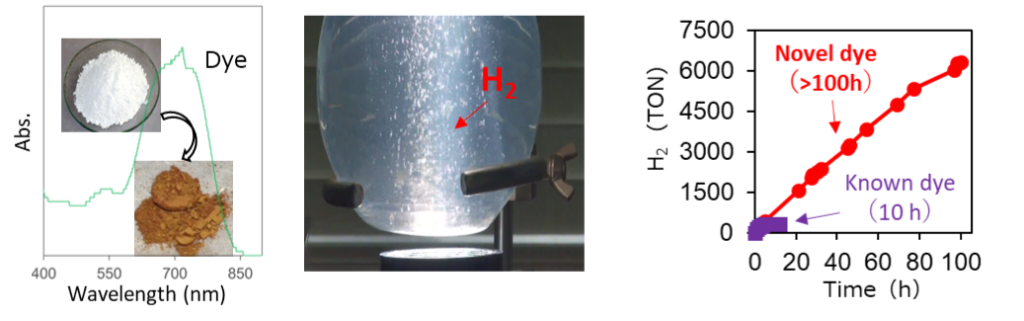
Synthesis of novel organic semiconducting materials

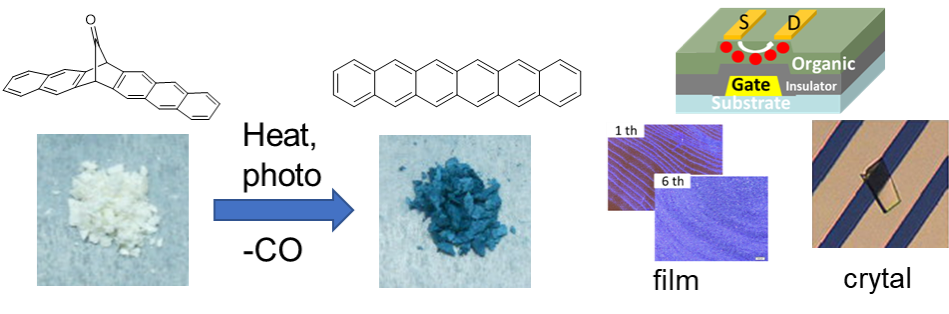
Organic semiconductors are expected to be applied to photoelectric conversion materials such as transistors, OLEDs, and OPVs by adjusting the HOMO-LUMO gap. We are working on the synthesis of these organic semiconductor materials. For example, acene is a type of aromatic hydrocarbon consisting of linearly fused benzene rings. Notable features of these molecules include an extended flat structure and a narrow gap between the HOMO and His LUMO energy levels. However, these molecules are relatively unstable and have low solubility in common solvents. We have developed a new synthetic route for higher acenes using stable and soluble “precursors.” This precursor quantitatively generates an acene structure upon heating or irradiation with light. By applying this method, it is possible to develop organic semiconductor materials.

Organic-inorganic hybrid photocatalysts for photocatalytic and photoelectrocatalytic energy conversion

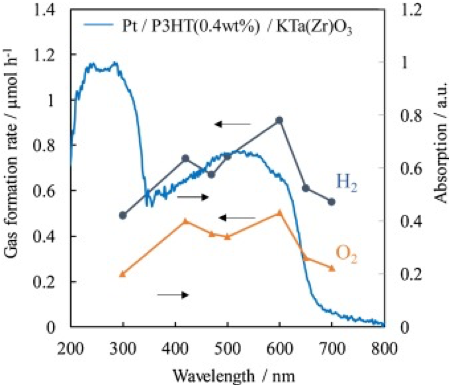
Most of the components of sunlight are visible light and near-infrared/infrared light, and there is a need for methods to efficiently utilize these components. Since the energy gap of organic semiconductors can be easily adjusted, it is possible to develop materials tailored to the photochemical reaction potential in the visible to near-infrared region. We are researching the interface chemistry of organic-inorganic semiconductors, such stabilization, and formation of charge separation states between interfaces created by developing targeted organic semiconductors and combining them with inorganic semiconductors. Using organic/inorganic semiconductor composite photocatalysts, we are developing water splitting, hydrogen peroxide synthesis, carbon dioxide reduction, or photoelectrochemical reactions.

Research Methods and Facilities

Synthesis of organic semiconductors using precursor method

Organic material development, structural analysis such as NMR analysis, IR, Raman, molecular weight analysis, etc.

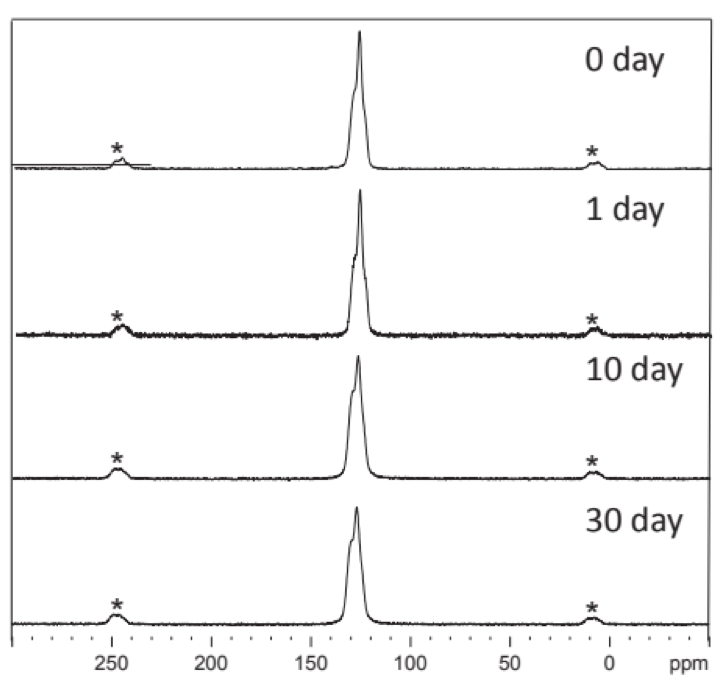
NMR analysis
Structural analysis using liquid and solid NMR analysis and analysis of material changes before and after reaction
Chemical reactions and analysis using organic/inorganic hybrid photocatalysts

Structural analysis by NMR analysis, IR, Raman, molecular weight, SEM analysis, etc., identification of products by photocatalytic reaction, photoelectrochemical reaction.

Analysis of photocatalyst production efficiency and photoresponsiveness
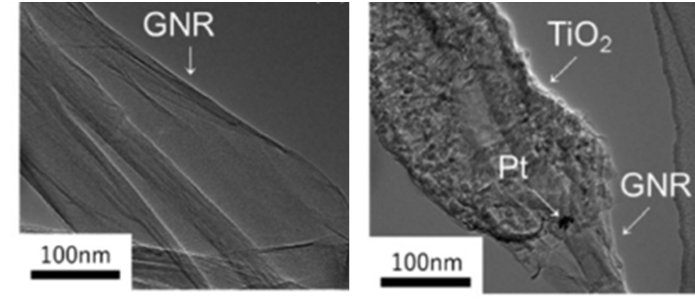
Analysis of graphene-inorganic composite