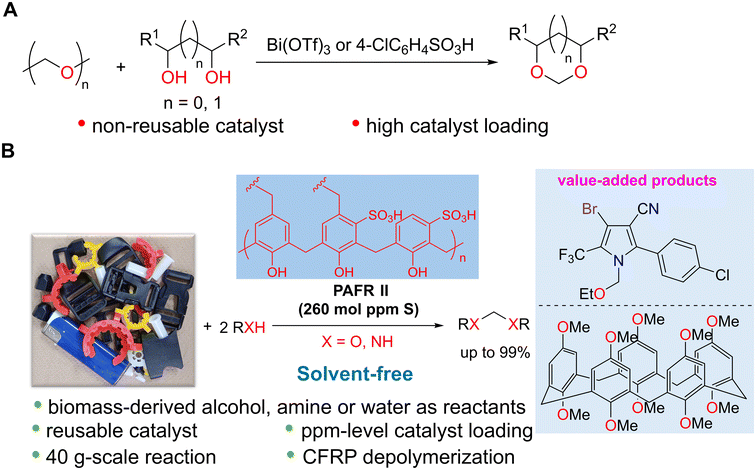

Associate Professor Andrew Chapman and his research group have achieved the upcycling of waste polyoxymethylene (POM) plastics using a novel polymeric heterogeneous catalyst.
POM plastic was upcycled using m-phenolsulfonic acid-formaldehyde resin, a polymeric heterogeneous catalyst, to afford multiple value-added chemicals, including solvents, insecticides, herbicides, and pillar[5]arenes using biomass-derived alcohols, amines or water as reactants. The acid catalyst exhibited stable and reliable performance at a 260 mol ppm S loading and remained active after five reuse cycles without any loss of catalytic efficiency. The upcycling process was effective even at a 40-gram scale. Under acid-catalyzed conditions, the POM moiety in carbon-fiber-reinforced polymers (CFRPs; 360 mg–5 g scale) was selectively depolymerized, yielding carbon fibers free of POM residues, as confirmed by solid-state NMR and SEM. This process also mitigates environmental concerns by converting microplastics into value-added chemicals. Additionally, microwave irradiation proved more effective (up to 99% upcycling) than conventional heating methods (73%). Life cycle assessment analysis results indicate that this upcycling process is sustainable and helps reduce environmental pollution.
Abhijit Sen, “Upcycling waste polyoxymethylene to value-added chemicals using reusable polymeric acid catalysts at ppm levels”, Green Chemistry, 2026, DOI:10.1039/D5GC06065F